
Sacchin Sundar

Robot learning, generative art,
and a little of Madurai.

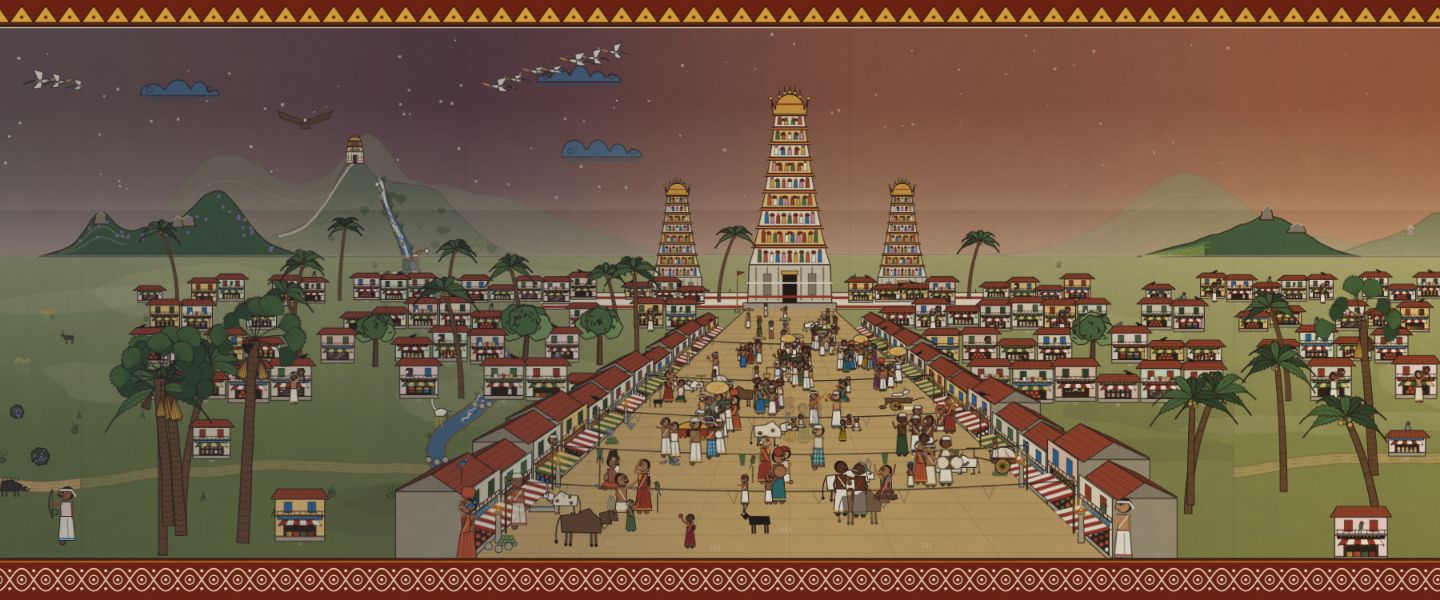
A generative mural of Madurai, with people and market stalls on a street leading to the Meenakshi temple.
மதுரைMadurai, my hometown

A street that leads home, to the Meenakshi temple.

The story of Aintinai

Wander somewhere

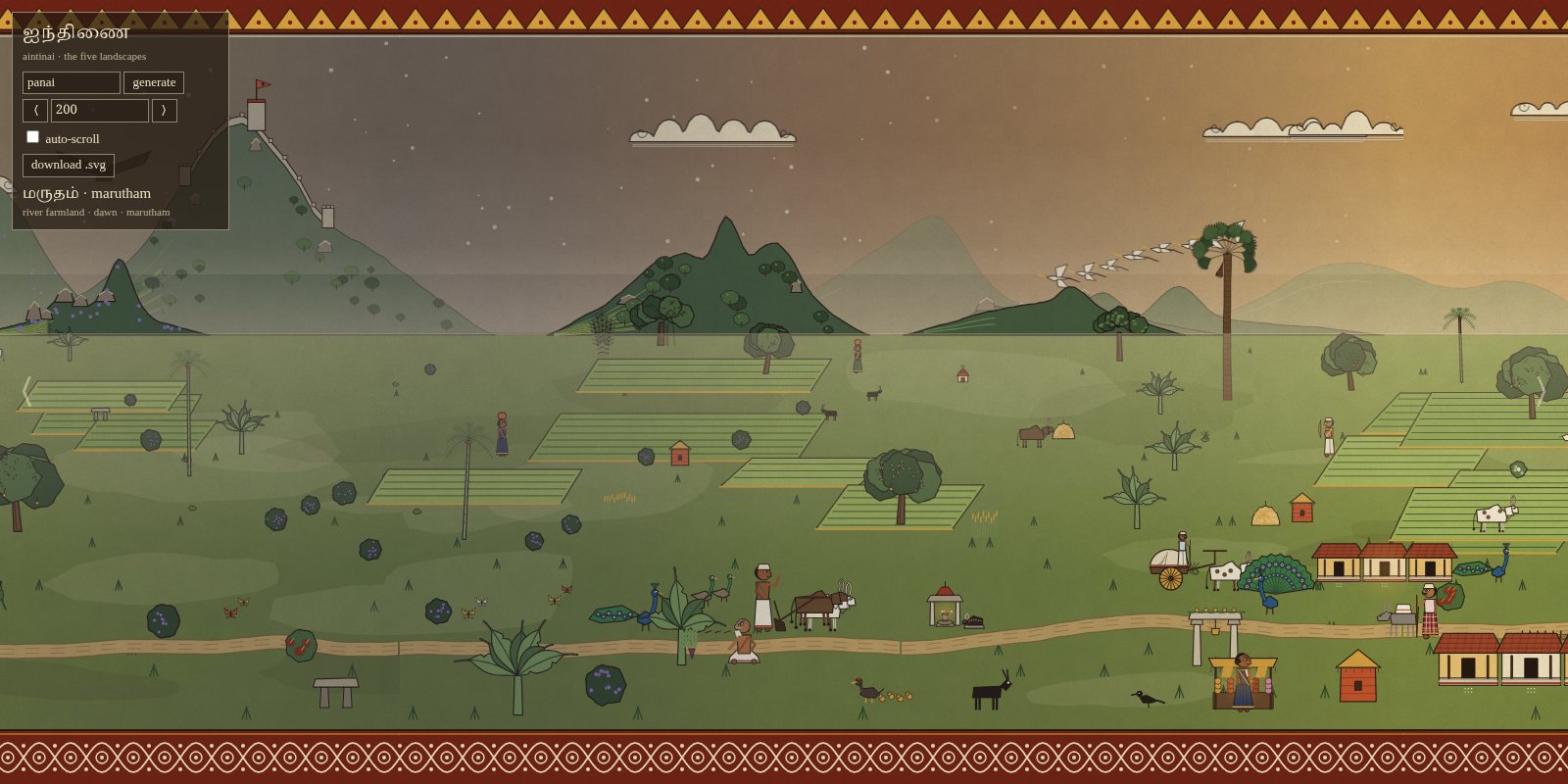
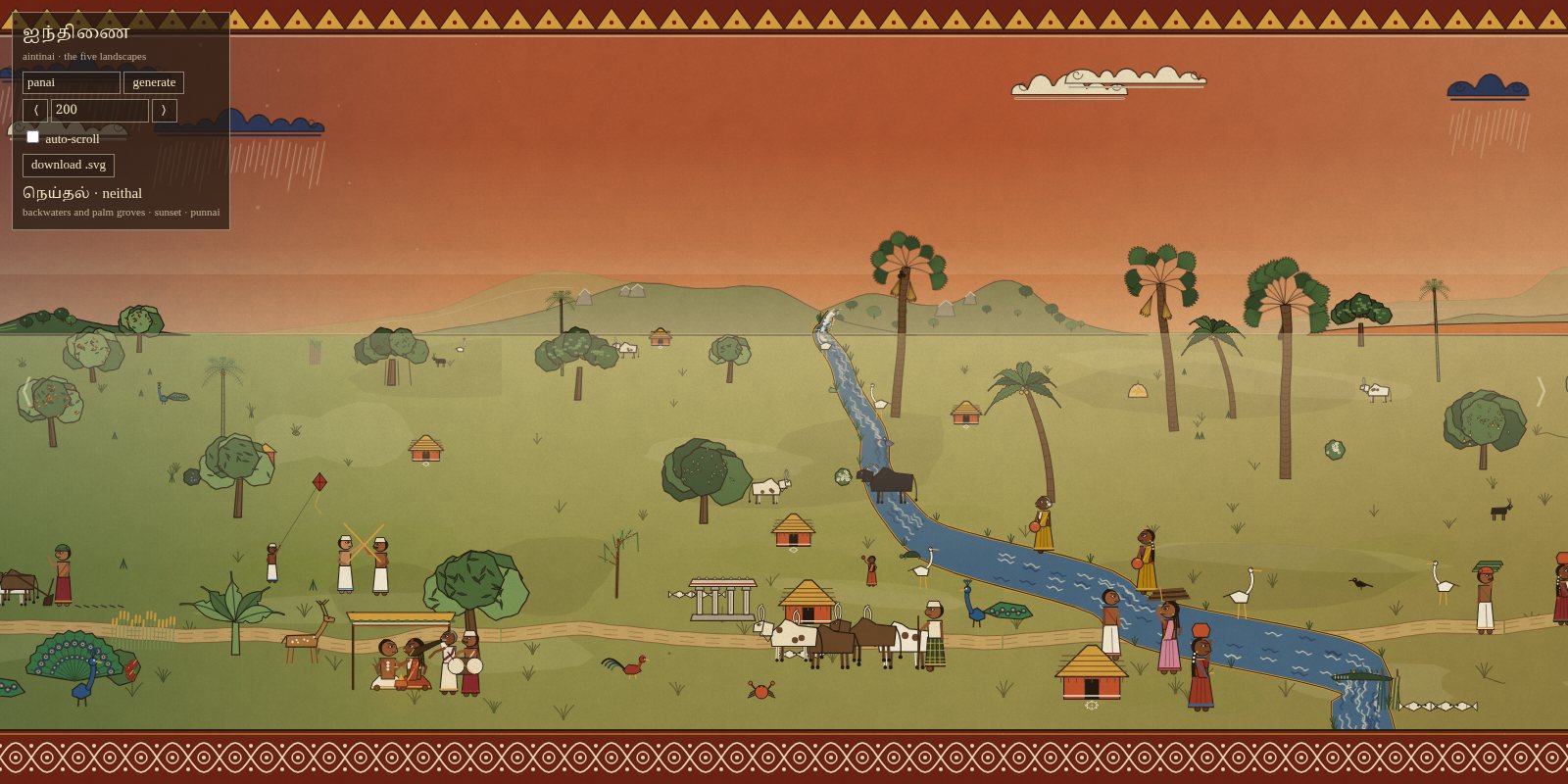
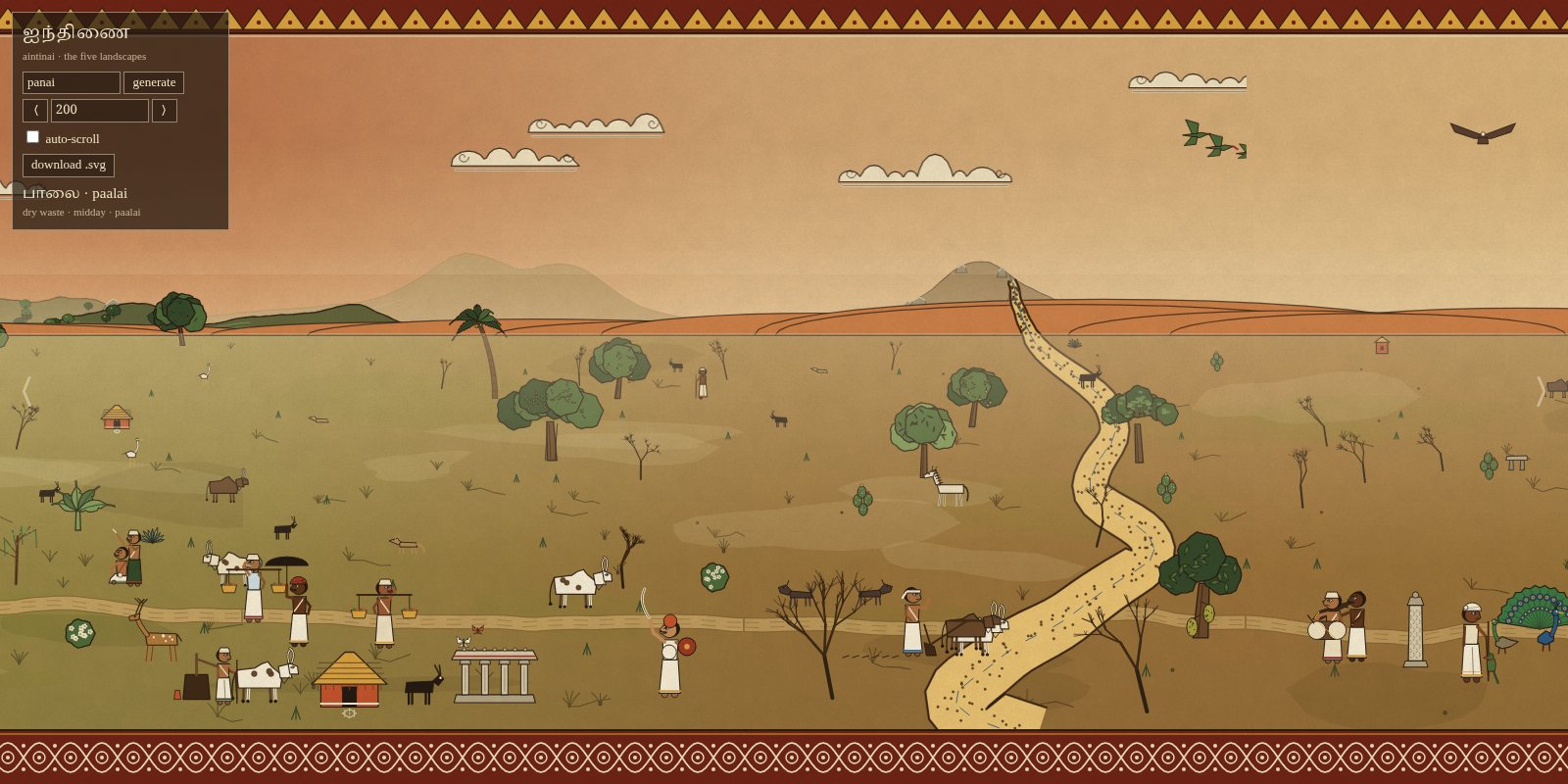
ஐந்திணைAintinai

A landscape is also
a way of feeling.

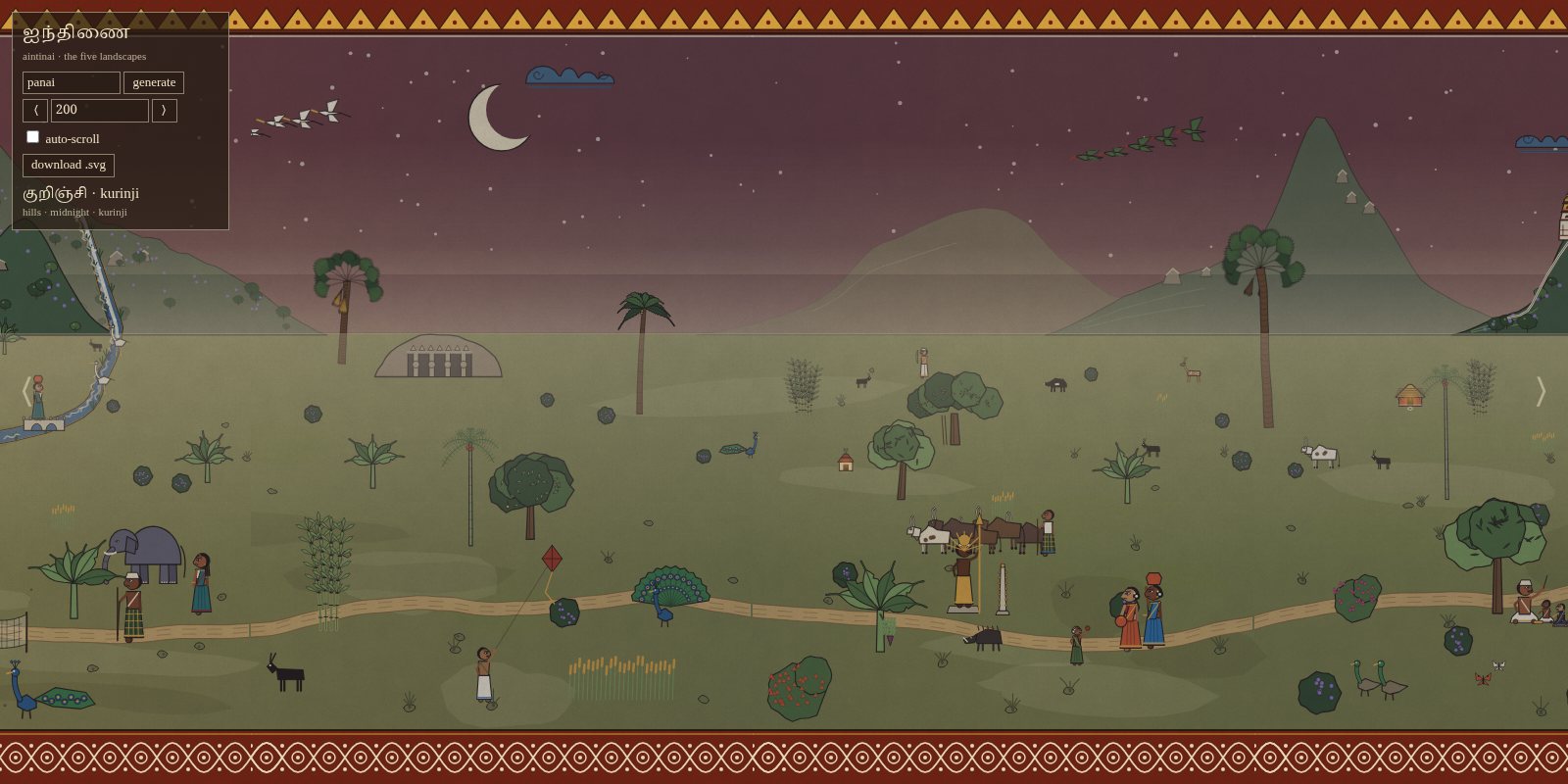
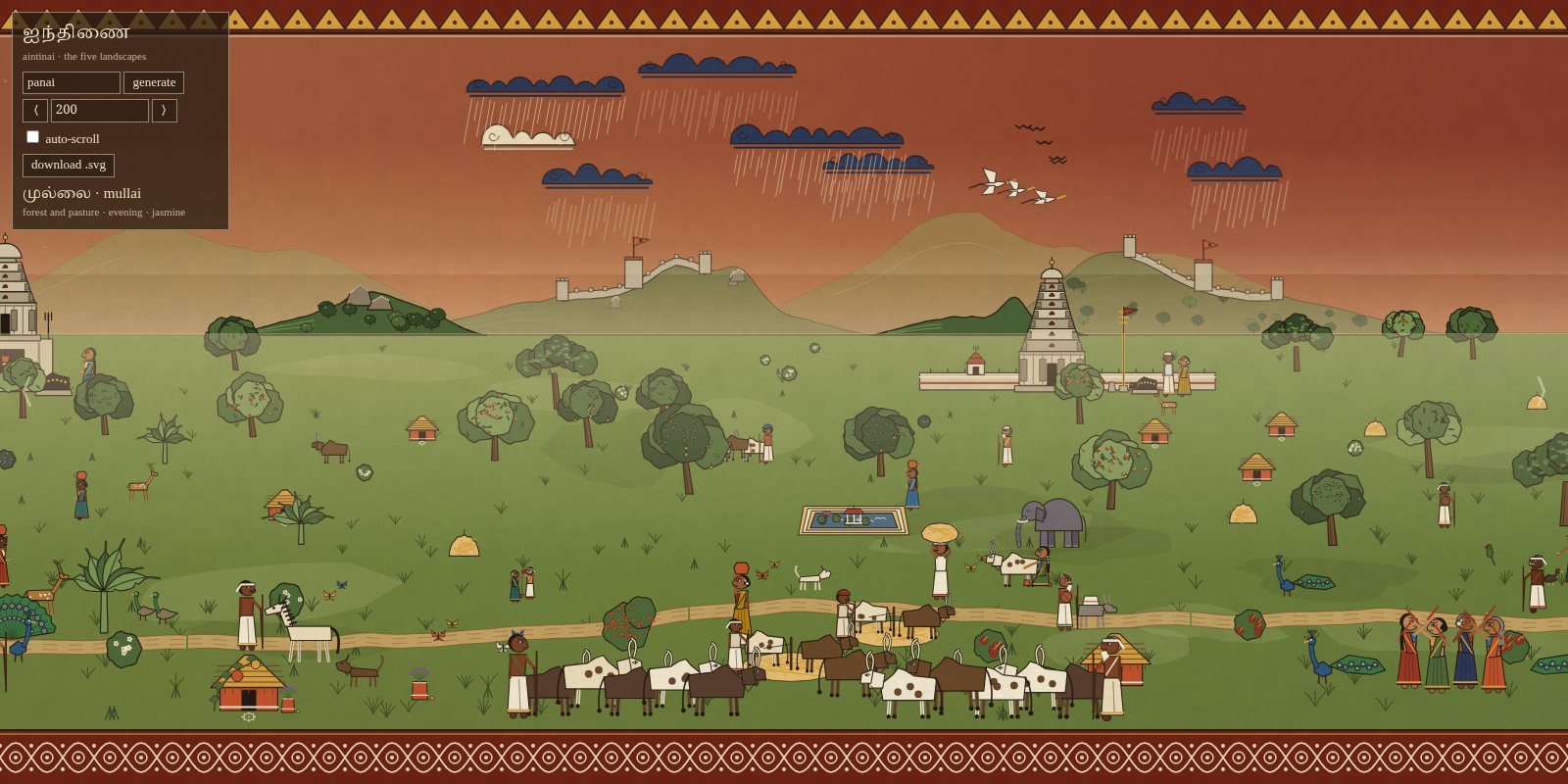
In classical Tamil Sangam poetry, the five landscapes connect the natural world with our inner lives. Mountains speak of union. Forests, of waiting. The coast, of longing.

I made Aintinai to bring those worlds to life, drawing on the colours, dark outlines, and ornamental borders of Nayak temple murals. Its paths eventually lead to Madurai, where I’m from.

Explore the full painting

Drawn with code.
Rooted in a place.

Every tree, shrine, animal, and person comes from hand-authored drawing code. Seeded randomness gives the rules a different expression in every world. No image-generation model; just JavaScript, SVG, and a world that unfolds as you explore.

Sacchin Sundar

A little about me

I build learning systems that connect perception, prediction, and action on physical robots.

I’m a Member of Technical Staff at a stealth company, working on world action models and industrial robot manipulation. My work spans world models, robot foundation models, multimodal learning, and 3D perception, with a focus on reusable manipulation skills, online policy refinement, and reliable real-world deployment.

I completed my master’s at the University of Michigan in May 2026, where I worked with Prof. Katie Skinner in the Field Robotics Group on underwater perception and SLAM.

Outside robotics, I make generative art rooted in Tamil landscapes and the streets of Madurai. I also write on Latent Gaussian.

Field Robotics GroupUniversity of Michigan Robotics

Selected research

Learning to act in the world.
Robot learning and 3D perception.

SCOUT

Submitted to ICLR 2027

Critic-Guided Schrödinger Transport for Online VLA Refinement

Sacchin Sundar1*, Huaidian Hou1*, Yaoru Liu2, Dong Sun2, Siyuan Ji2, Junshan Zhang1,3 (*equal contribution)

Read abstract

Critic-guided Schrödinger bridge refinement adapts frozen vision-language-action (VLA) policies using sparse rewards. A lightweight two-step actor removes candidate search and critic evaluation from inference. Evaluated on LIBERO, LIBERO-PRO, and bimanual robot hardware, with 92.3% mean LIBERO success compared with a 53.1% base policy, and stacking time reduced from 26.1 to 13.3 seconds.

SurfSLAM

Accepted to IEEE Transactions on Field Robotics

Sim-to-Real Underwater Stereo Reconstruction For Real-Time SLAM

Onur Bagoren*, Seth Isaacson*, Sacchin Sundar, Yung-Ching Sun, Anja Sheppard, Haoyu Ma, Abrar Shariff, Ram Vasudevan, Katherine A. Skinner (*equal contribution)

Read abstract

SurfSLAM is a real-time underwater SLAM framework that combines learned stereo depth with acoustic-inertial odometry for localization and dense 3D reconstruction. Its sim-to-real training pipeline uses physics-based underwater image augmentation and self-supervised fine-tuning to adapt stereo networks to challenging underwater conditions. Evaluated on real-world shipwreck surveys, the framework improves stereo depth estimation, trajectory estimation, and reconstruction of complex underwater scenes.

Find me on Google Scholar

Happy accidents

Sometimes, the wrong result
is worth keeping.

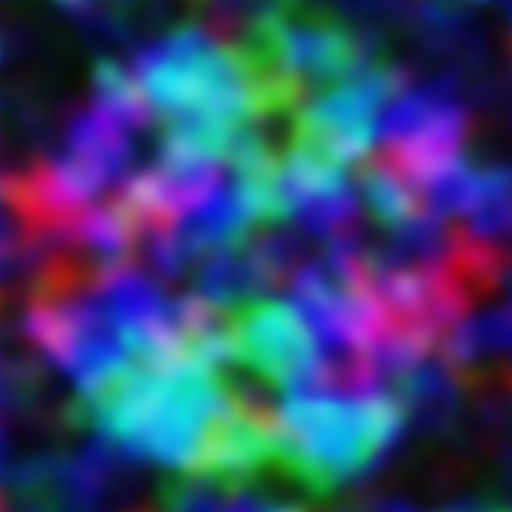
My research has often produced weird art as an unintended byproduct. Frustrating in the lab; interesting enough to find a home here.

A collection of six experiments.

Experimental SIREN artwork 1 of 6: colourful abstract neural patterns.
From the lab, with a little serendipity.

A thought, now and then.

I write at Latent Gaussian.

Read on Substack